
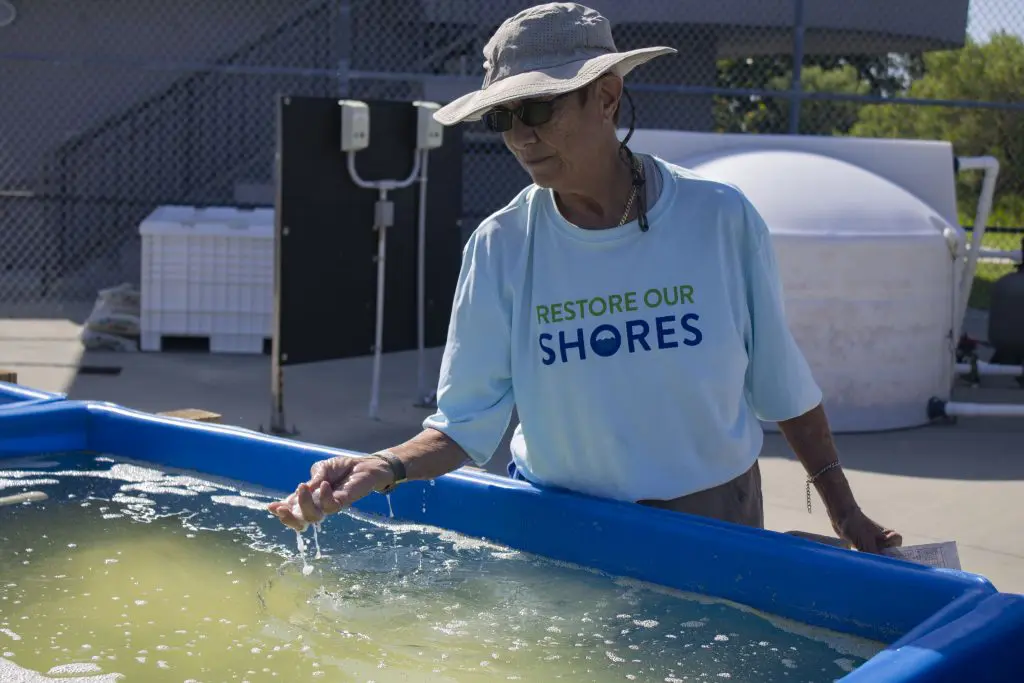
Our teams are on the cutting edge of research when it comes to Halodule wrightii, the primary species used for seagrass restoration in the lagoon. While Halodule wrightii is historically one of the most abundant species in the lagoon, its reproductive capabilities and life cycle are not fully understood.
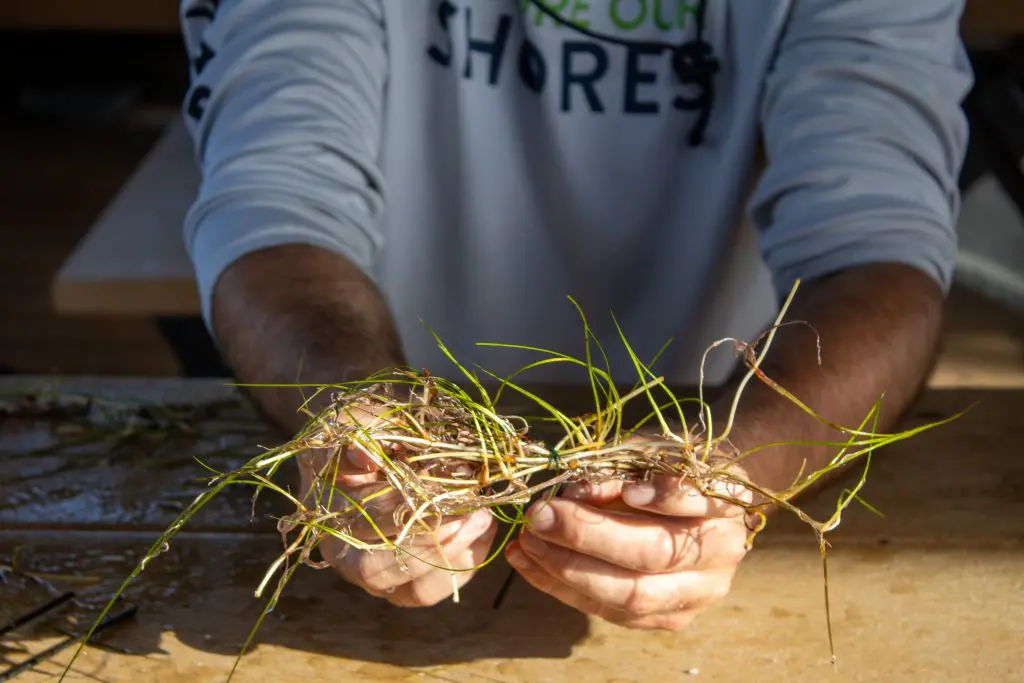
Our Restore Our Shores (ROS) team recently began using seagrass grown at its own nursery in restoration and research projects in the Indian River Lagoon!
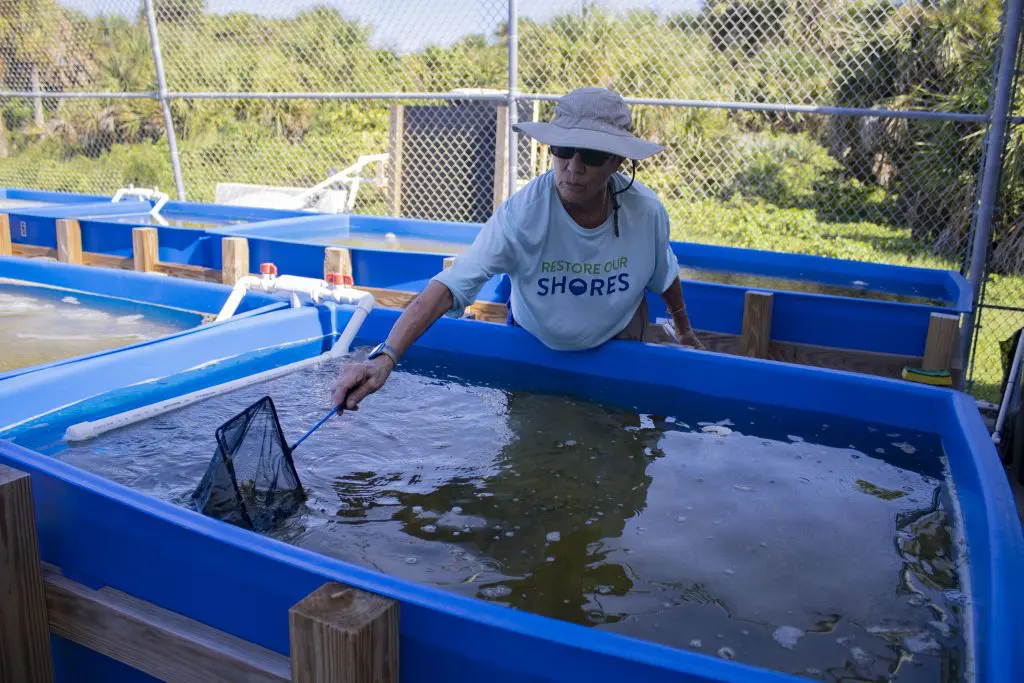
Our Restore Our Shores team has made some progress – and learned a lot – in the first year of managing our seagrass nursery.
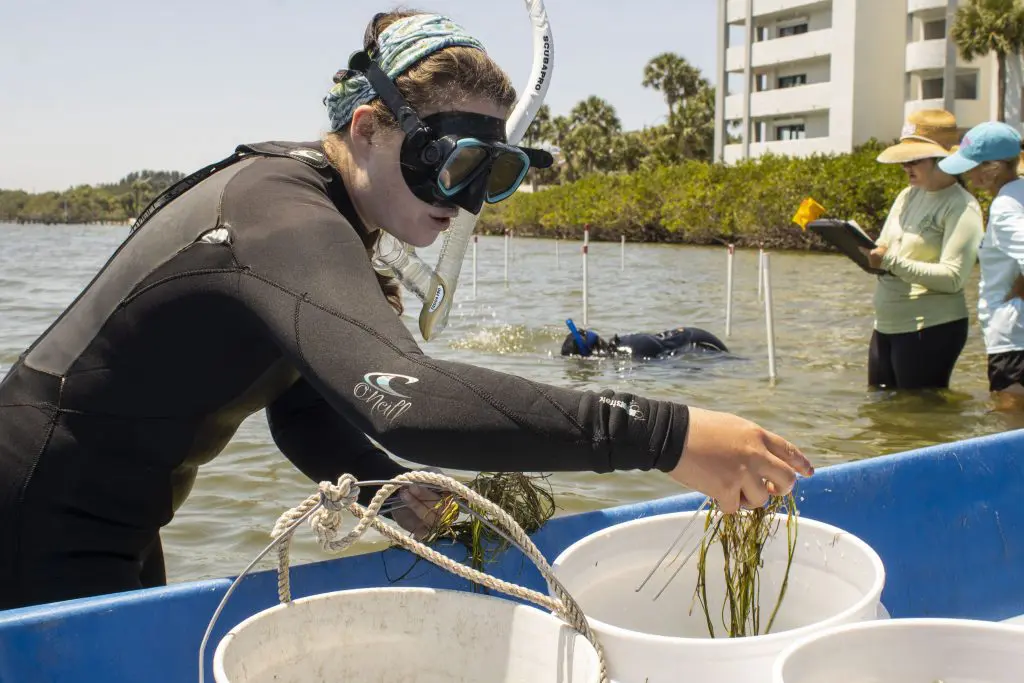
We’re celebrating World Seagrass Day by giving you an update on some of our important seagrass conservation work happening right in our (and possibly your literal) backyard.
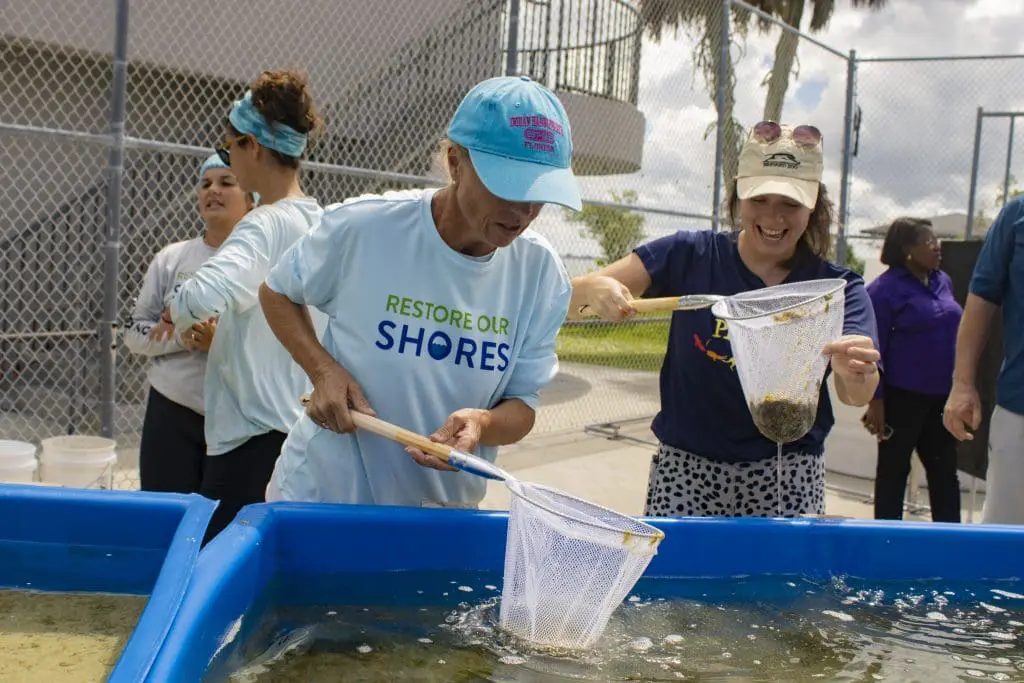
Our first seagrass nursery is now fully functional and growing seagrass! This nursery, which was built in partnership with the Hubbs-SeaWorld Research Institute (HSWRI), is in Melbourne Beach.
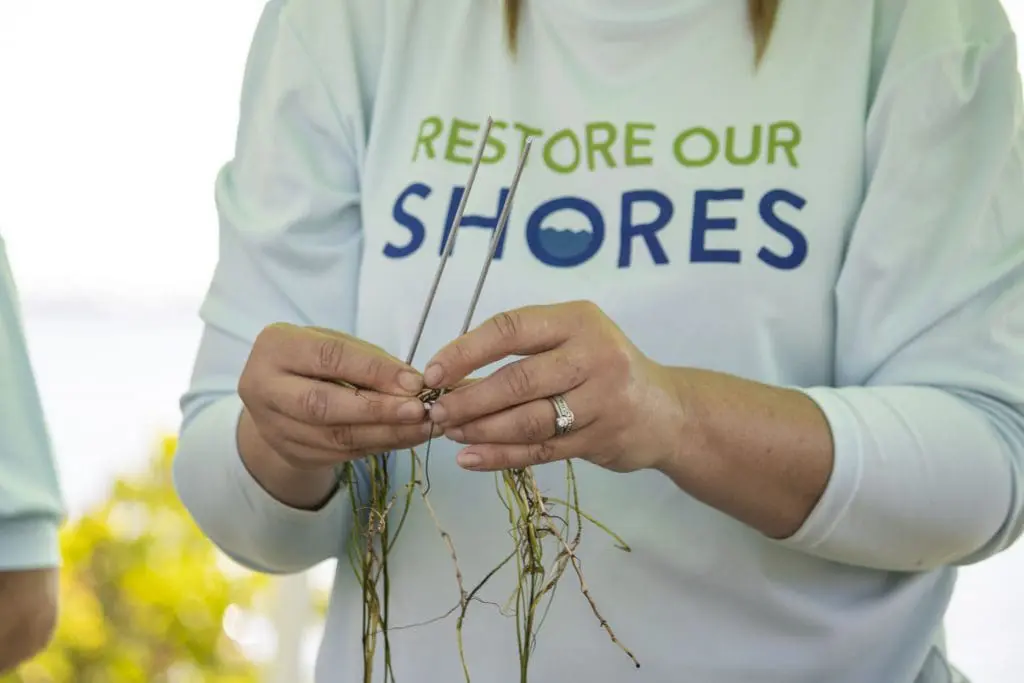
Our Restore Our Shores (ROS) conservation program has started planting small beds of seagrass in the lagoon for a new experimental project.