
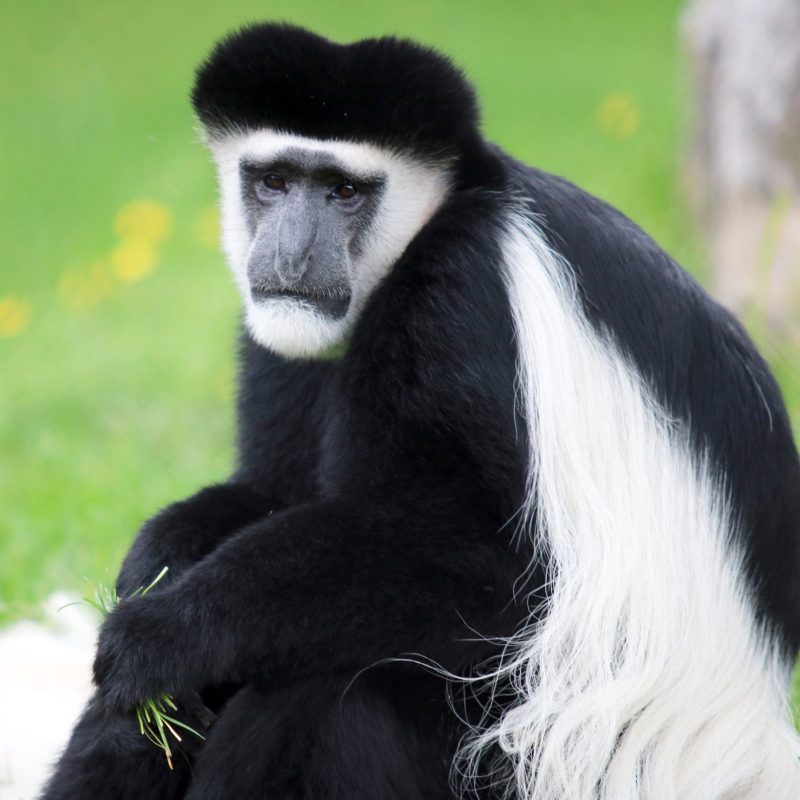
Razi is one of our three new colobus monkeys! (Photo credit: Rosamond Gifford Zoo)
We have some new faces swinging into the spotlight! In the next couple of weeks, we will be welcoming a breeding group of three black and white colobus monkeys as part of the Association of Zoos and Aquarium’s (AZA) Species Survival Plan (SSP). We are thrilled to welcome females Zuba and Naia from Nashville Zoo and male Razi from Rosamond Gifford Zoo. These large African primates will fit right in on our large island in Expedition Africa.
Colobus monkey populations are decreasing in their natural range of central Africa and are vulnerable to extinction due to habitat loss and fragmentation and human predation. We’re proud to be able to help contribute to the growing, healthy population of these incredible primates in human care that will act as a safeguard population and ambassadors for their native counterparts.
Before the new residents arrive, our facilities team has been making modifications to the island, including the construction of a nighthouse and landscaping changes, that will ensure the monkeys feel right at home.
Colobus monkeys are known for their iconic black and white coats. Their bodies and faces are jet black and the tips of their tails and manes boast long white locks. Most of the native population of these leaf-eating primates are found in the Democratic Republic of the Congo. There, they live in dense rainforests where they spend their days in the canopy leaping through trees and snacking on tasty greens.
These monkeys positively contribute to their ecosystems through their role as seed dispersers. After munching on plants, the monkeys distribute plant seeds through their droppings, promoting healthy and necessary plant growth. There is a correlation between an abundance of colobus monkeys in a location and the health of that ecosystem, and their absence can often be detrimental.
Want to help colobus monkeys in their native range? You can bring your old phones and tablets to our Zoo to recycle through Eco-Cell! Colobus’ native habitat in the Democratic Republic of the Congo is rich in coltan, a resource used to make electronics. The mining of coltan disrupts their natural range. By recycling electronics properly, you lower the demand for coltan and help preserve this habitat.
Another way to help this species: Support AZA-accredited organizations like ours to help bolster safeguard populations of this species. We can’t wait to welcome these new residents. We will share more updates with you soon!
Brevard Zoo is an independent, not-for-profit organization that receives no recurring government funding for our operating costs. Your generous support enables us to continue to serve our community and continue our vital animal wellness, education and conservation programs.
We would like to thank the following generous donors for supporting our mission-based programs:
Flammio Financial Group · Stifel- Garvin Wealth Management Group · Artemis IT · Pepsi Bottling Company · Amazon · PCL Construction | Nassal | MEC | Heard