
Editor’s Note: The Florida Fish and Wildlife Conservation Commission’s (FWC) Bear Management Program works closely with Brevard Zoo and other partners to ensure orphaned black bear cubs not yet able to survive on their own are given the best chances at successful rehabilitation and eventual release back into their natural habitat. The FWC aims to release rehabilitated young bears on public conservation areas that have high-quality bear habitat and low density of both bears and people to give them the best chances for survival.
A trio of Florida black bear cub siblings have been reunited at East Coast Zoological Foundation’s Black Bear Rehabilitation Center!
Six-month-old Avocado was initially found in the Oklawaha area and joined our rehabilitation center in early August. A homeowner in the area reached out to Florida Fish and Wildlife Conservation Commission (FWC) about a single bear cub being seen without a mother bear present for two days. As the cub had been alone for two days, staff with the FWC’s Bear Management Program stepped in to rescue the cub, who we are calling Avocado, and bring her to the Zoo for rehabilitation. No other cubs or adult female bear were spotted in the area at the time.
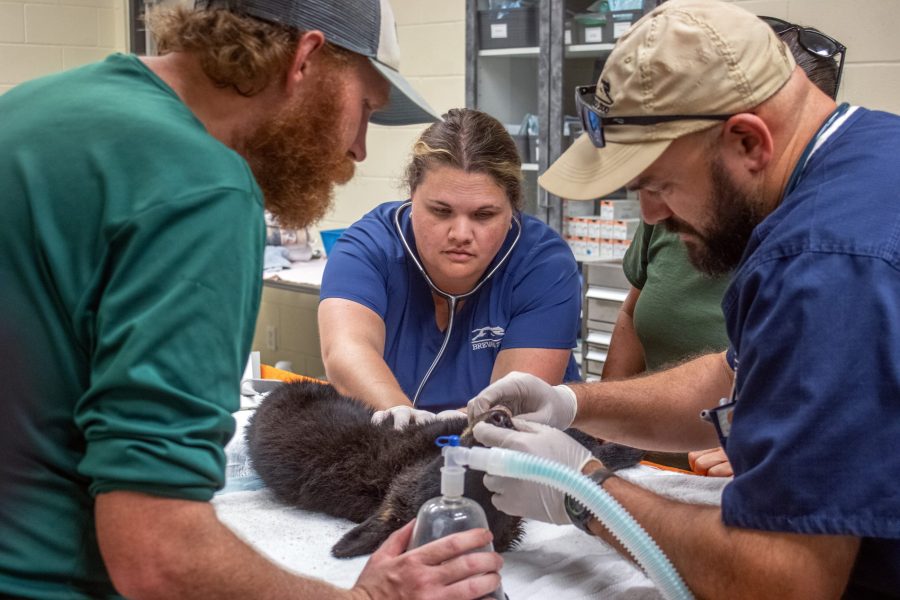
Recently, a different homeowner on the same street where Avocado was found let FWC know that two other cubs had been spotted without their mother, and also mentioned that originally there had been three cubs spotted (who we now know was likely Avocado). FWC staff found and brought the two female cubs, who we are calling Nana and Grampy, to the Zoo for care as well. All three sisters sport a similar marking on their chests. It is unclear how the cubs were separated from their mother.
Aside from some rather large (and now removed) ticks, Grampy and Nana are in overall good health. The cub trio has joined the other residents of our Rehabilitation Center, where they spend their days learning “how to be a bear” – interacting with fellow bears, foraging for food, navigating different terrains (like ponds!), and more.
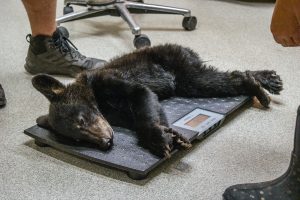 We want all these cubs to be released back to their native range once they reach certain milestones. Our animal care team strives to keep these cubs from associating people with food, relying on the camera system in their habitat to keep a close watch over them.
Bears are so important to their ecosystem for a number of reasons, including dispersing seeds throughout their territories and even breaking up decomposing matter in their search for insects. Every cub rehabilitated is a win in conserving the Florida black bear species.
Simple actions you can take to help bears:
Learn more ways to live responsibly among bears at BearWise.org and MyFWC.com/Bear.
Please contact the FWC’s 24-hour Wildlife Alert Hotline right away at 888-404-FWCC (3922) if you have found an orphaned, sick, injured or dead Florida black bear.