
Bye, bye, bears!
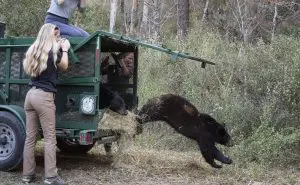
The new year is already off to a thrilling start! Last week, we released 15 rehabilitated Florida black bear cubs back to their natural habitat after months of care at East Coast Zoological Foundation’s (ECZF) Black Bear Rehabilitation Center at Brevard Zoo. Nonprofit ECZF leads the Brevard Zoo and upcoming Bowen Aquarium campuses, making strides in wildlife conservation efforts like our bear rehabilitation.
Since the opening of our Black Bear Rehabilitation Center in May of last year, we’ve been able to care for more sick, injured or orphaned bear cubs than ever! Often found alone without a mother to show them natural bear behaviors and survival skills, these bears needed a safe place to land for medical attention, rehabilitation and nourishment.
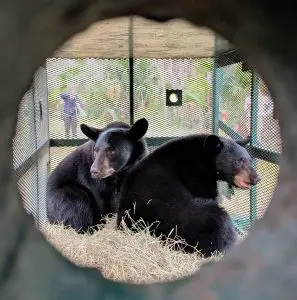
Bear cubs Rickie and Branch prepare for their release. (Photo by Michelle Lee/Brevard Zoo)
The cubs were brought to us by bear biologists with the Florida Fish and Wildlife Conservation Commission (FWC). After the cubs were treated for any wounds, infections or ailments, they slowly shifted into our Rehabilitation Center, a space for them to play, socialize with one another and practice normal bear behaviors like foraging, climbing, swimming and more.
Each cub was released in areas across Florida that are sparsely populated with both humans and other bears to help them adjust to their natural range once again. We released siblings and bonded bears together in hopes they find comfort in each other’s company out in the big world.
Here’s a brief recap on each of the 17 cubs we took in and released:
Phew! Can you believe how many cubs we’ve treated? We’re incredibly thankful to support the Florida black bear population and give these little ones another chance at leading a happy, healthy life.
“It was an amazing feeling to see the bears released into their native range, particularly Rickie, who was such a tiny fragile cub when she arrived, and Jon Bear, who overcame extreme odds,” said Director of Animal Programs Lauren Hinson. “I will miss watching them grow and play, but the reward of seeing them released makes it all worth it.”
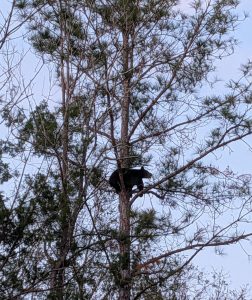
One of our rehabilitated cubs, Branch, quickly climbed up a nearby tree after his release! (Photo by Michelle Lee/Brevard Zoo)
Now that the cubs are released, things are looking a little bare in our Black Bear Rehabilitation Center. Bear cubs are typically born in January or February, so it may be a little while until we see another patient. Nevertheless, there’s still lots to be done around here! Bears are quite destructive, so our bear team plans to completely reset our Rehabilitation Center in preparation for the year ahead.
Thank you to Pat McMahon and Bob Mansbart for their generous donations toward the building of our Black Bear Rehabilitation Center, affectionately known as Brody Bear’s Rescue and Rehab.
We would like to thank the following generous donors for supporting our mission-based programs:
Flammio Financial Group · Stifel- Garvin Wealth Management Group · Artemis IT · Pepsi Bottling Company · Amazon · PCL Construction | Nassal | MEC | Heard