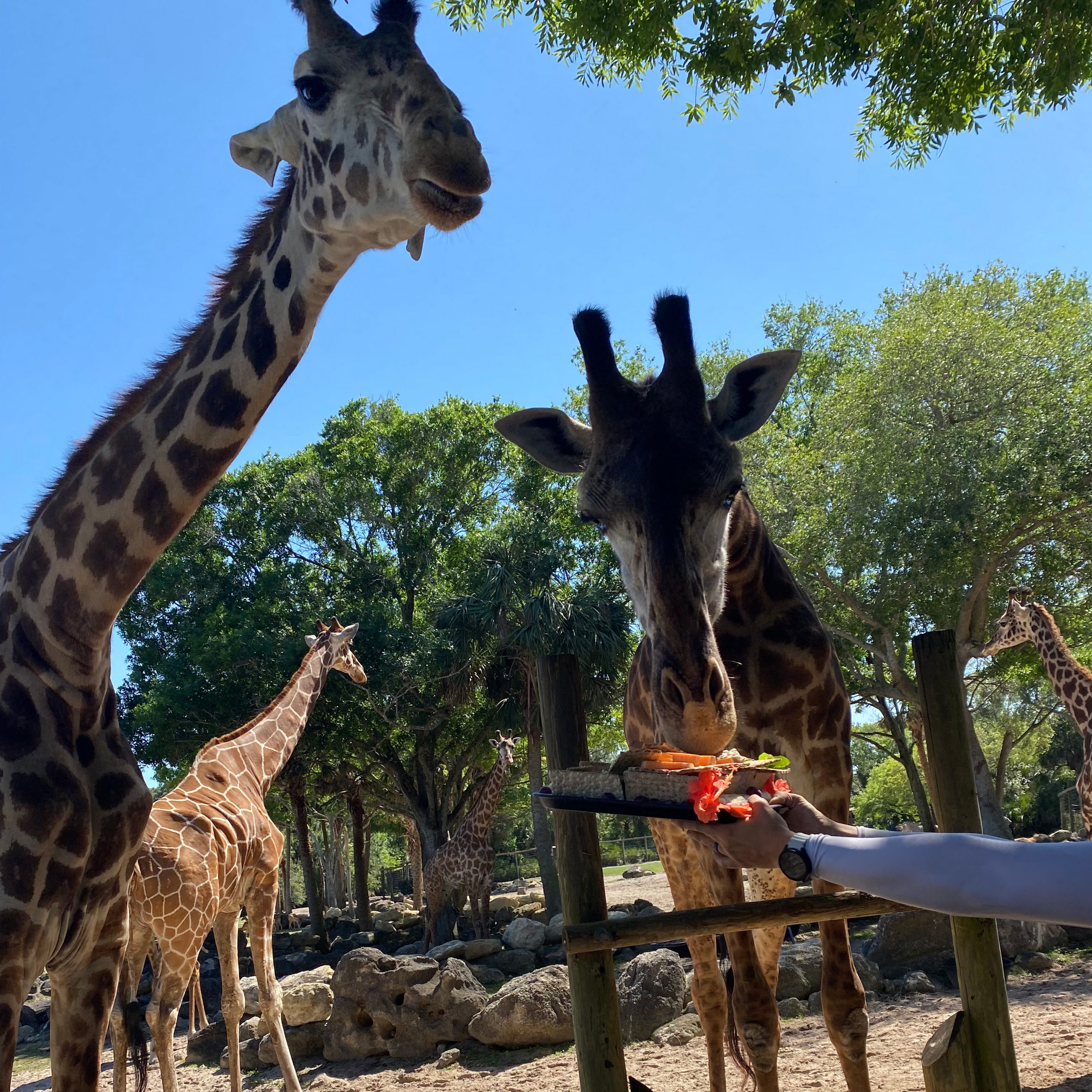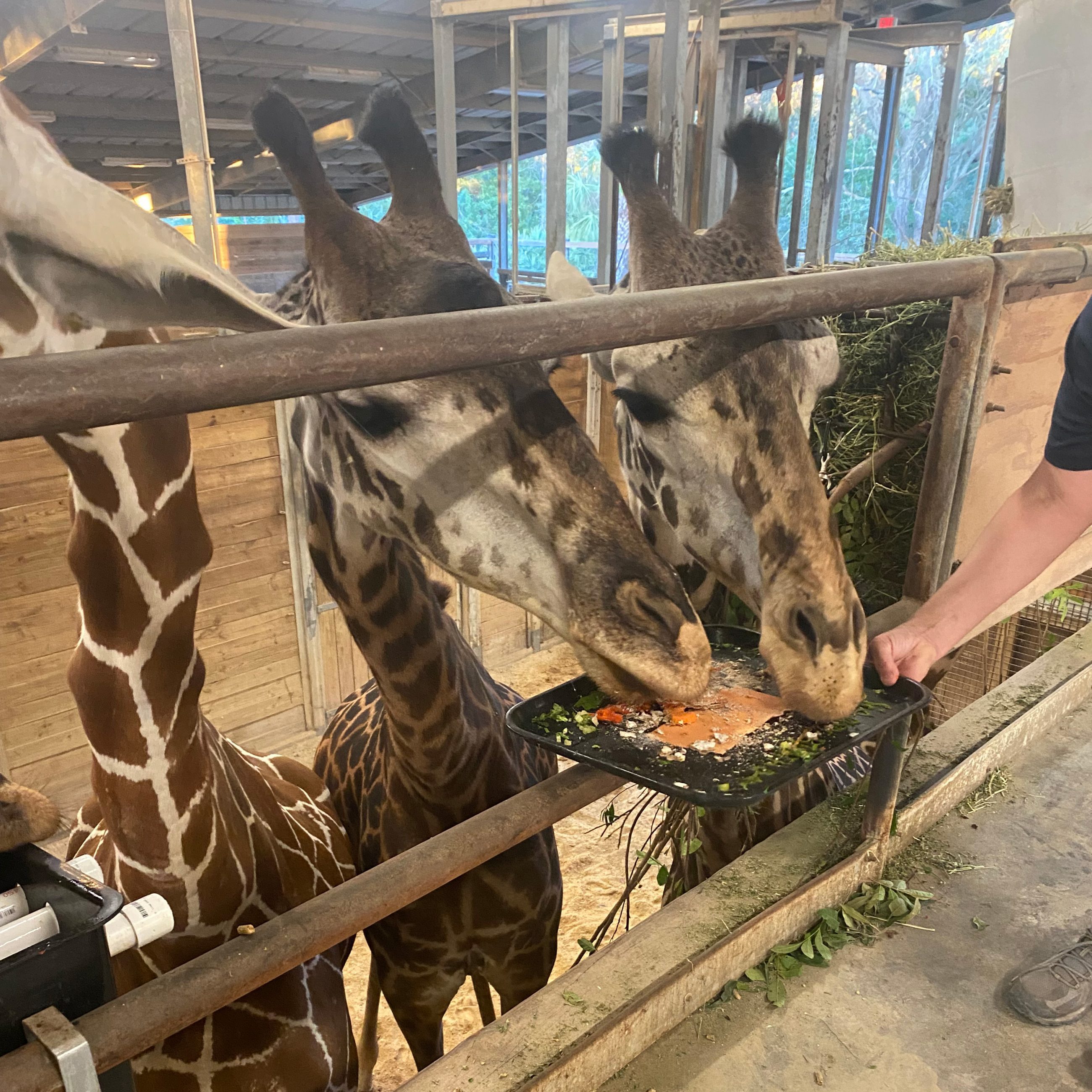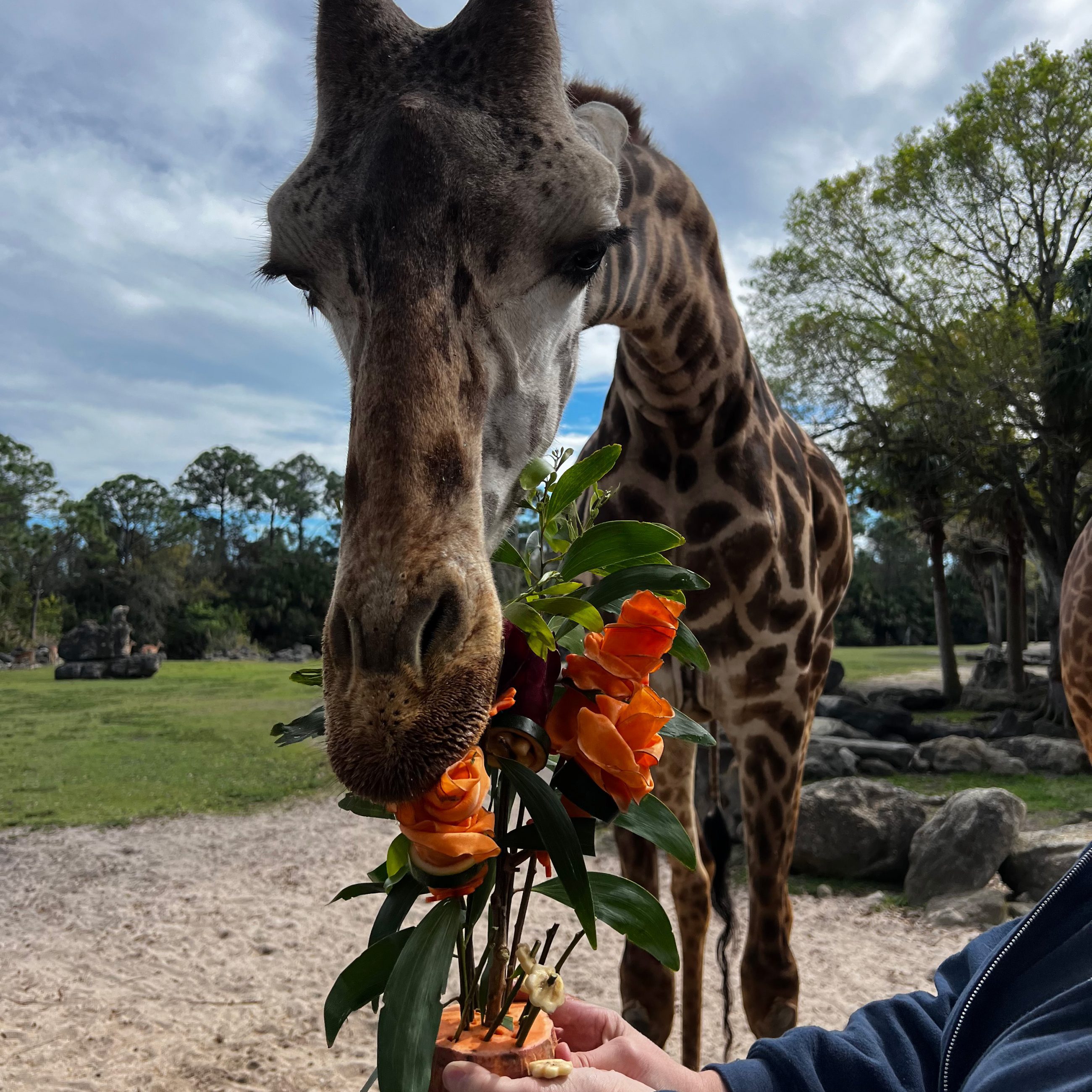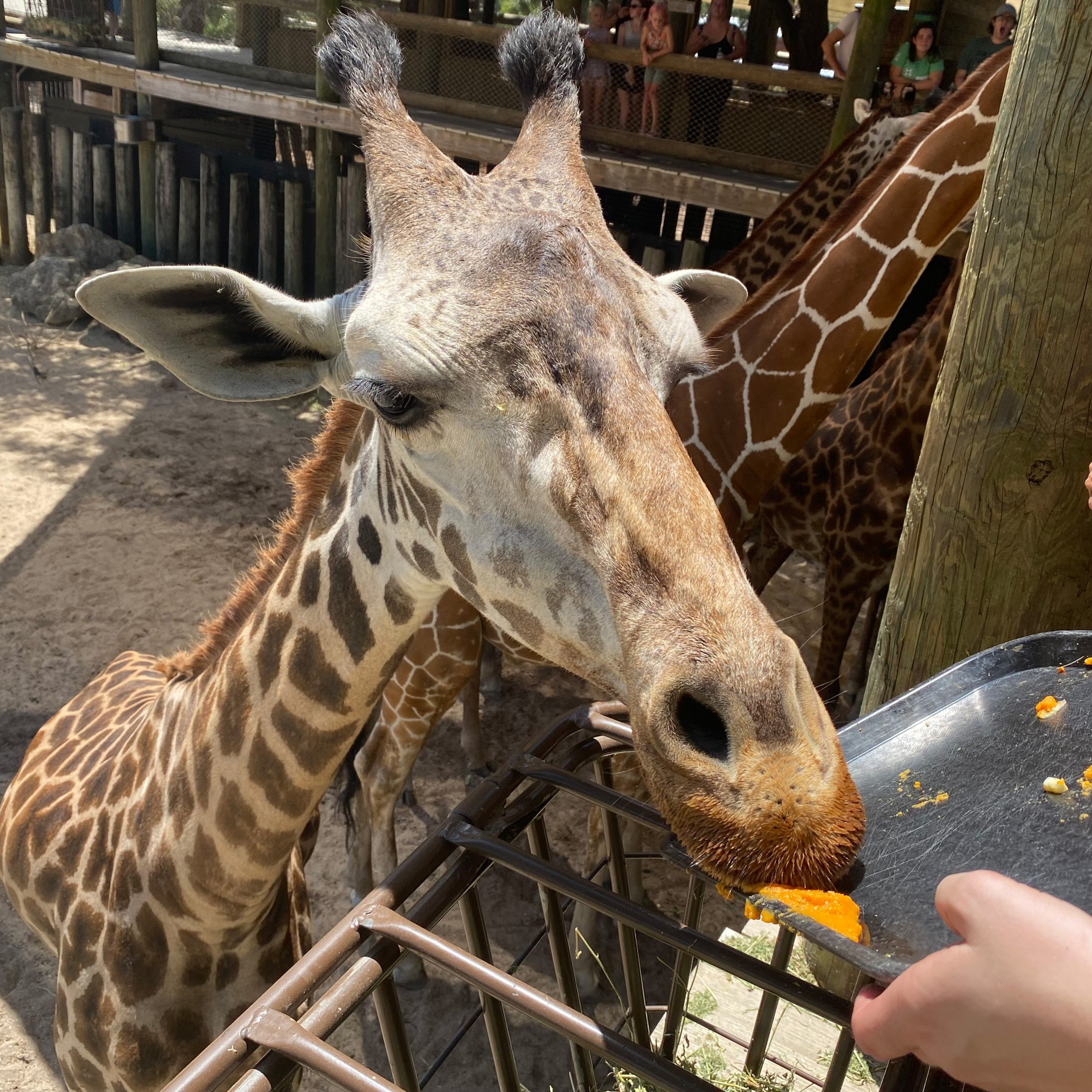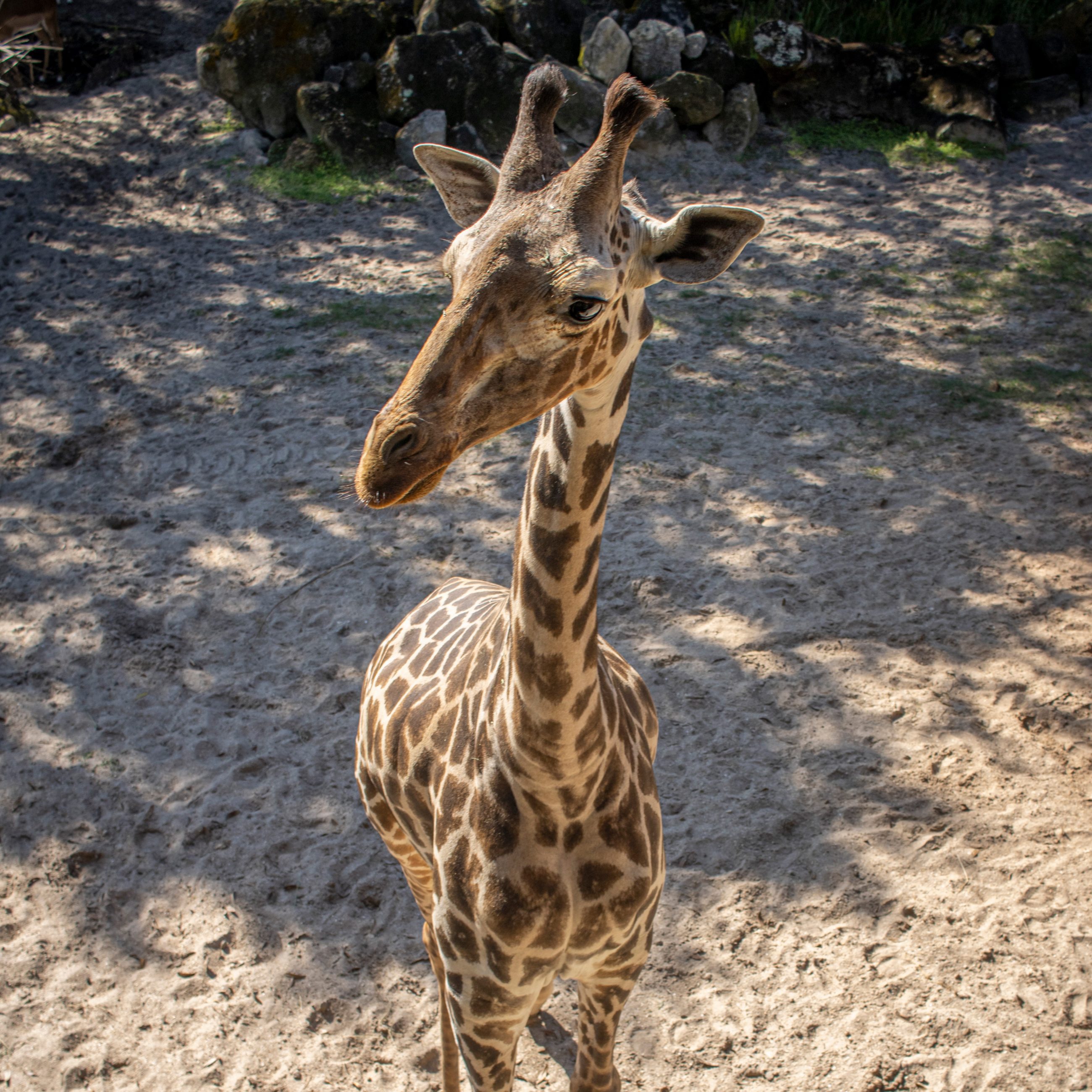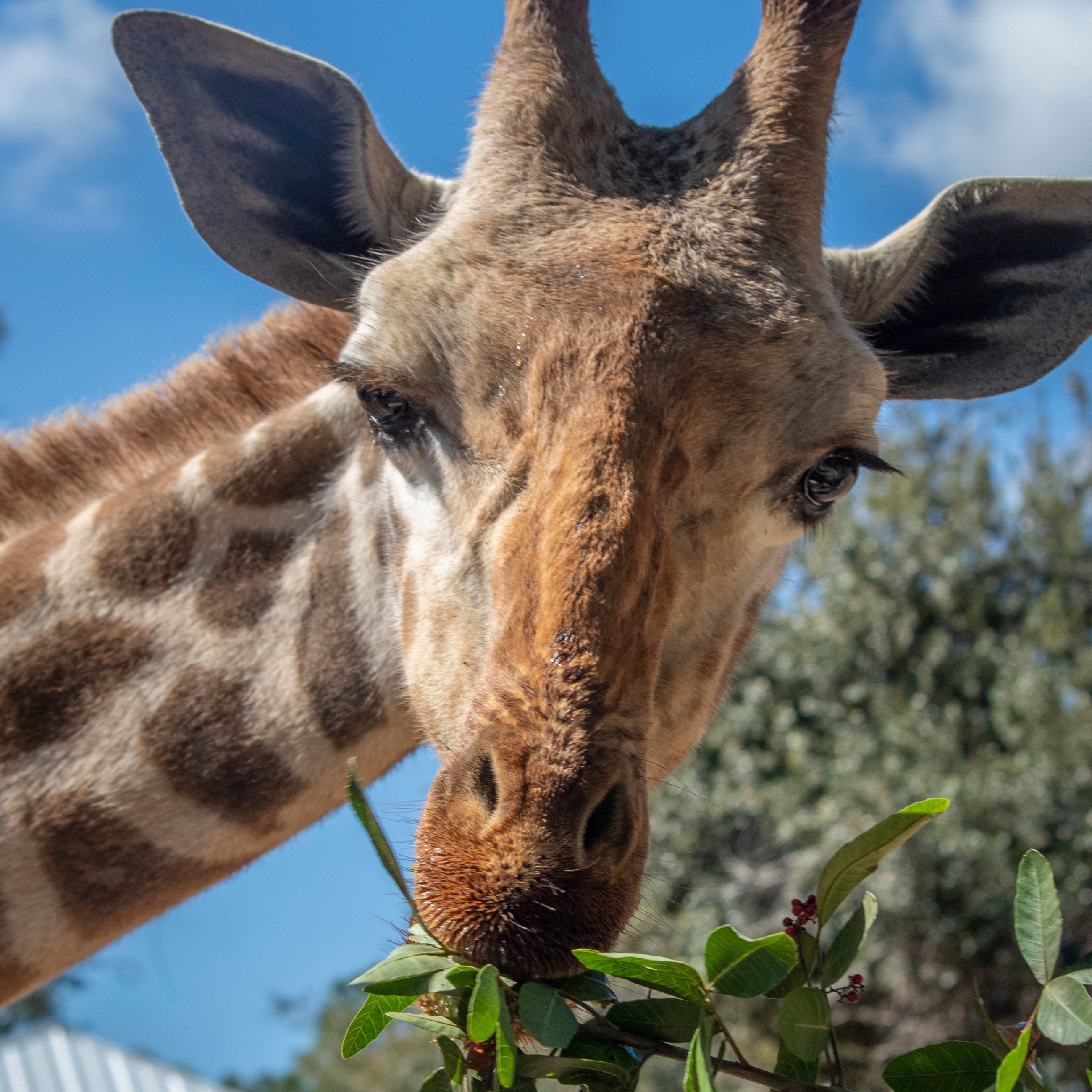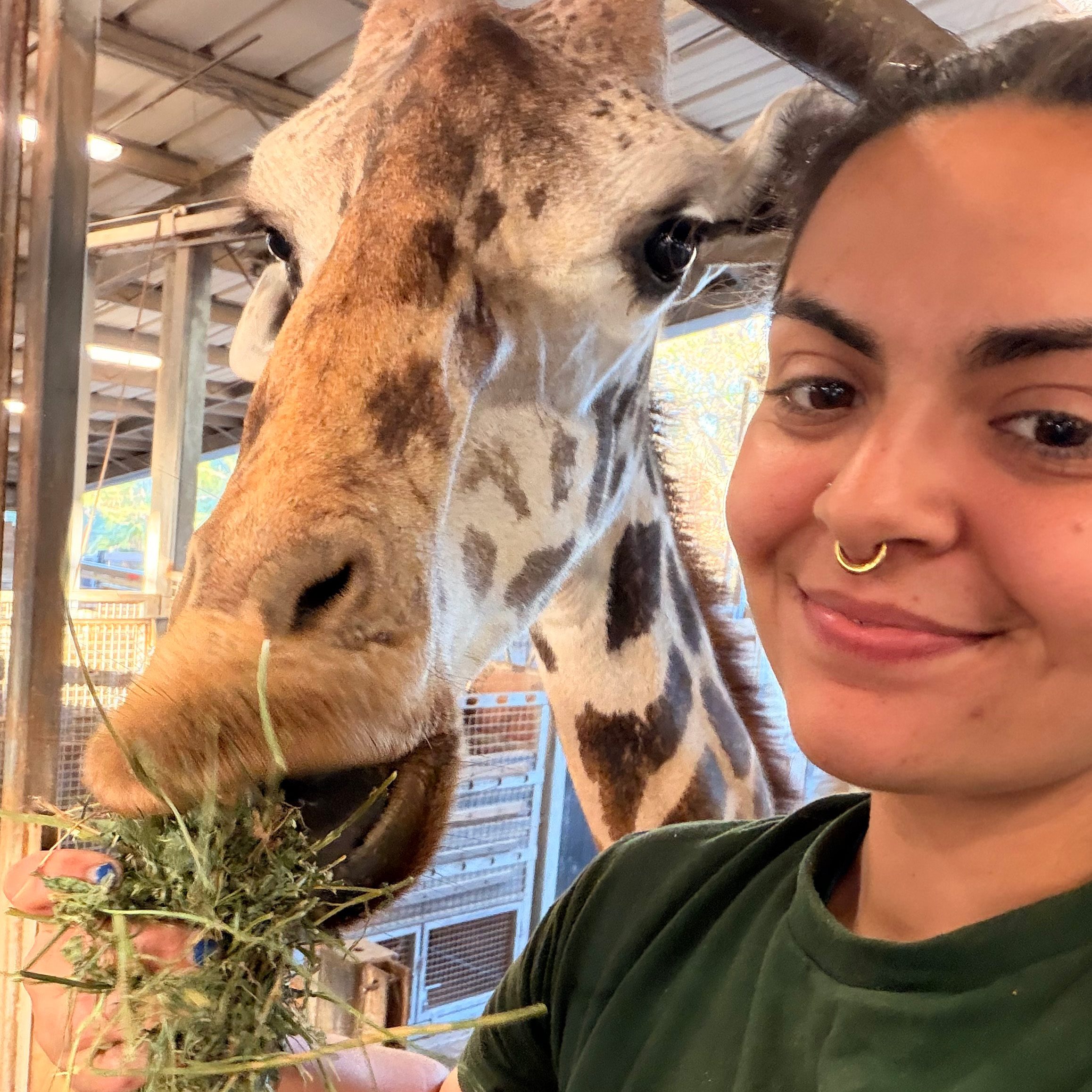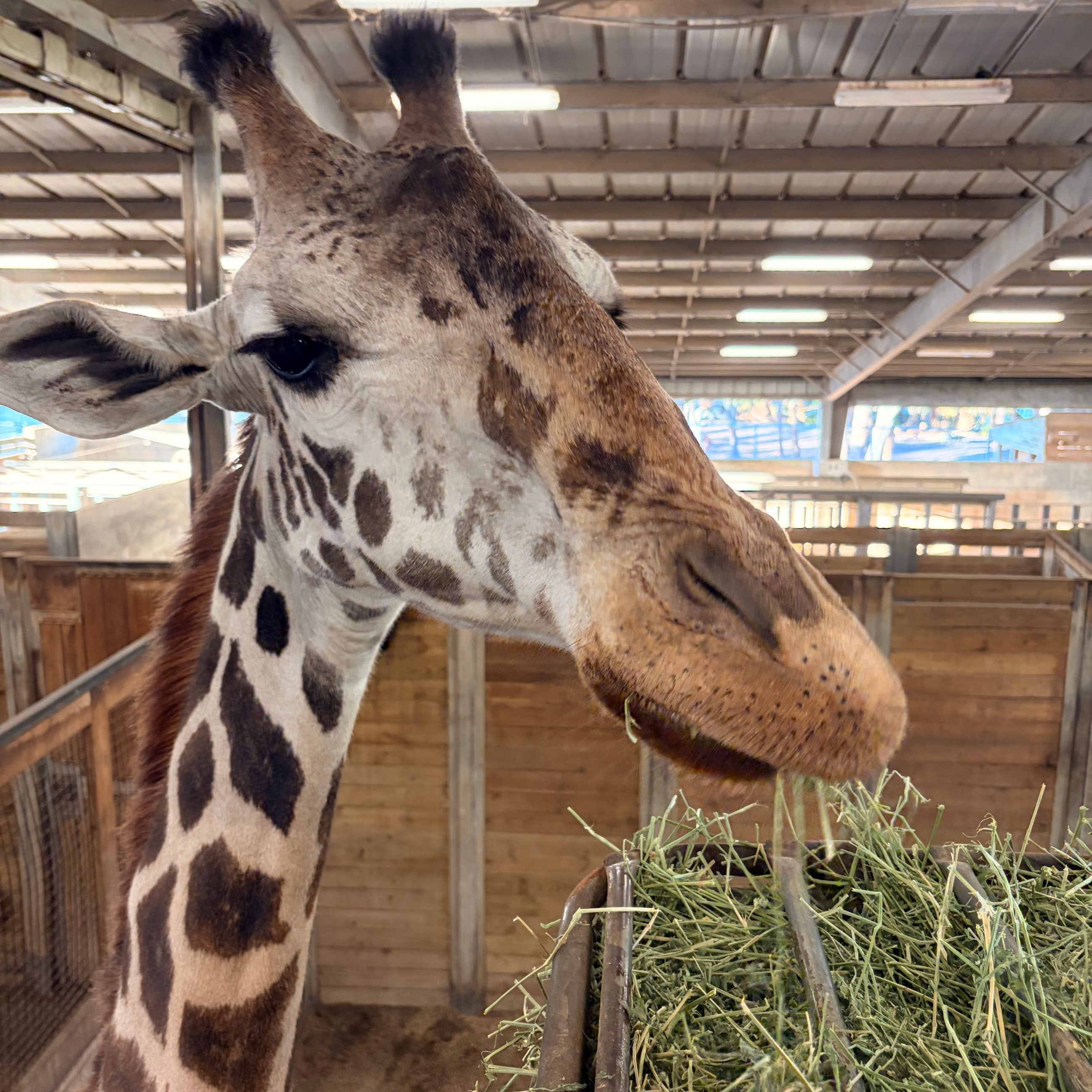
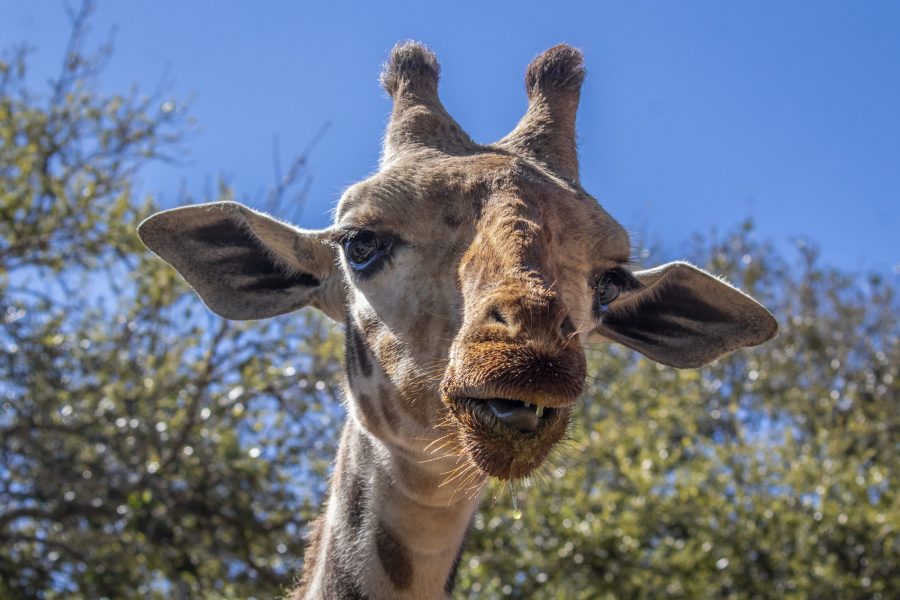
Floyd will be deeply missed by our Zoo.
We are sad to share that Floyd, our 9-year-old Masai giraffe, was humanely euthanized after receiving an extensive exam for ongoing health issues.
Floyd had been experiencing increased difficulty walking over the last few weeks. Unfortunately, his symptoms progressed from mild lameness to almost bearing no weight on his right front leg.
Our veterinary team had been keeping Floyd on stall rest and managing him on multiple medications to control pain while monitoring his health. They performed blood and urine tests, radiographs, thermography and hoof exams to identify the cause of his symptoms, all of which didn’t pinpoint the cause of his mobility issues. To understand the full scope of what could be plaguing Floyd, our team conducted a full-body exam. This type of procedure requires anesthesia, which can be especially risky for giraffes due to their unique anatomy. Floyd’s mobility challenges also added uncertainty. However, moving forward with the exam was the only way to understand how we could best help Floyd.
During the exam, it was discovered that Floyd had sustained a significant fracture to his right front foot, resulting in disruption of the tendons in that leg. At this time, it’s unclear how Floyd sustained this injury, as he had not been observed jumping, falling or sustaining any other injuries. This has led our team to believe that this injury may have been related to health issues he had in his earlier years. Custom polyethylene rubber “shoes” were built and placed on Floyd’s front hooves to offer support as he healed.
Unfortunately, despite a smooth procedure, Floyd was unable to stand up after anesthesia. This was likely due to a combination of factors, including pain from the fracture in his foot and loss of function in the tendons of that leg. Our team knew this was a risk going in, and they did everything they could to help give him the best chance of recovering well. Our team attempted to aid him by hoisting him onto his feet several times; however, this was unsuccessful. Considering his inability to bear weight and the strong chance the fracture would not heal, the compassionate but difficult decision was made to humanely euthanize him.
Floyd had a history of health issues and developmental delays that stretched back to his infancy. Our veterinary team believes that as a calf Floyd experienced failure of passive transfer (FPT), an immunodeficiency disorder that can occur when a calf does not receive the proper antibodies needed from their mother’s colostrum in the first few days of life. This can lead to many abnormalities. Early on it was observed that Floyd had stunted growth, excessive drooling and urinary issues. As these symptoms appeared, Floyd was treated by our veterinary team and was able to live, for the most part, a normal giraffe life among our tower.
Later on, at around three years of age, Floyd exhibited intermittent difficulty with walking and balancing. After several tests and exams, it remained unclear what was causing Floyd’s discomfort. Our team turned to giraffe specialists at other institutions, but they were left equally stumped. However, over time and with treatment, Floyd’s symptoms lessened until recently.
Floyd was born at our Zoo in 2017 to mom, Johari, and dad, Rafiki. He was known for his sweet demeanor and was beloved by his animal care team.
“As an apprentice keeper, Floyd was an amazing animal to work with,” said Expedition Africa keeper Faith. “He always had a calm but goofy demeanor.”
Floyd was also known for his voracious appetite. He was always the first to try a new food enrichment item, especially if bananas were involved.
“Where there was food, there was Floyd,” noted Faith. “I’ll never forget how he ate Kumi’s ‘birthday cake’ right in front of her!
Expedition Africa keeper, Morgan, was also fond of Floyd’s love of food. However, feeding Floyd often came with some spit-y surprises.
“Floyd was the drooliest boy.” said Morgan. “You could guarantee getting a little bit of drool on you whenever you would give him a snack or were training him for hoof trims.”
Floyd also made sure to always stay hydrated.
“One of my favorite memories of Floyd is that anytime we would put out a sprinkler or mister for the ostriches, Floyd would come right over and put his entire mouth over it,” remembers Expedition Africa keeper Kim. “He would stand there and just drink and drink and drink. Sometimes he would also wrap his tongue around the sprinkler and lick the water as it sprayed through the air. It almost seemed more enriching for him than the ostriches, and it always made my day.”
Floyd’s absence will be greatly felt on our African veldt.
“He was deeply loved and will be greatly missed,” said Morgan.
Please keep our Expedition Africa team in your thoughts during this time.
Brevard Zoo is an independent, not-for-profit organization that receives no recurring government funding for our operating costs. Your generous support enables us to continue to serve our community and continue our vital animal wellness, education and conservation programs.