
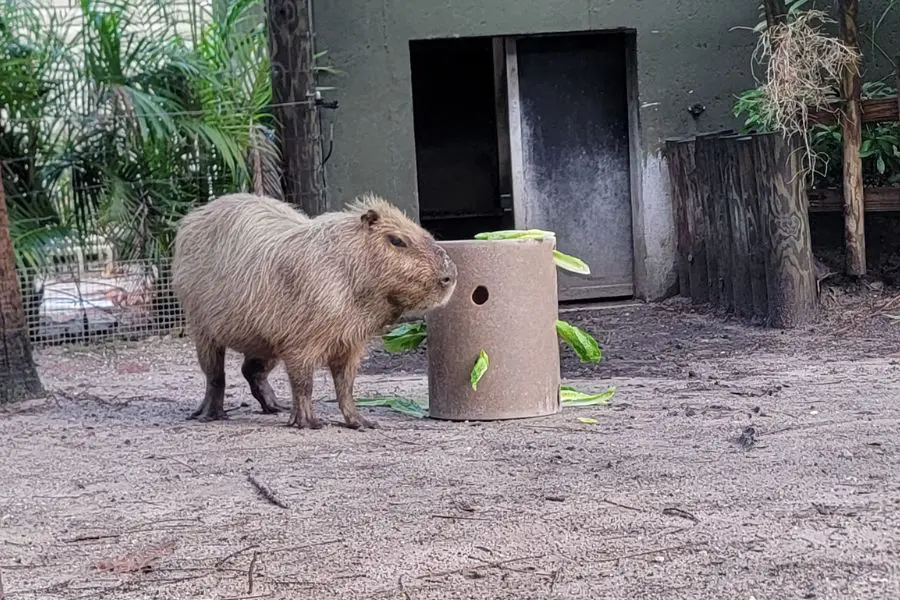
We’ve been going through a difficult time at our Zoo, as we said goodbye to a long-time animal resident, Biggie the capybara, who passed away recently. It’s never easy when we have to say goodbye to any animal in our care, and unfortunately we have lost a few the last couple of weeks.
“Biggie was one of my favorite animals to work with at Brevard Zoo,” said Lands of Change area supervisor Kayla Mindel. “He was very timid and needed time to build trust with keepers, but once you built a relationship with him, he was very personable and such an amazing animal.”
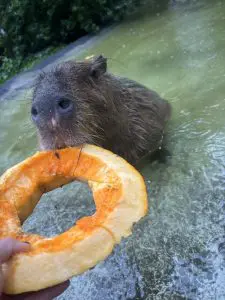 At 11 years old, Biggie was past the median life expectancy for his species, which is 7 years old for males, according to the Association of Zoos and Aquariums. As an older capybara, Biggie was closely monitored for any changes in his health or wellbeing.
In addition to arthritis, Biggie had ongoing, intermittent lameness issues that were initially improved through a variety of medications. This year, he also received two exams due to an ongoing loss-of-muscle condition despite having a good appetite. Nothing definitive was found in those exams.
Recently, the lameness worsened to the point that Biggie could no longer put any weight on his limbs. The decision to euthanize any of our animal residents is always taken seriously and with compassion as we consider their current and future quality of life. Our animal care and veterinary teams took into account that despite being on strong pain medication, Biggie was showing increasing weakness and lameness. Diagnostic imaging also showed Biggie had worsening arthritis. The humane decision was to euthanize Biggie to prevent future suffering.
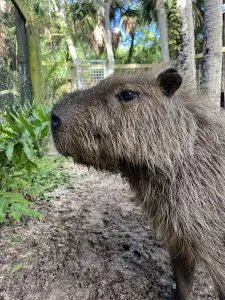 We know how much Biggie was loved not only by his animal care team and the rest of our Zoo staff and volunteers, but also by our community. It’s always hard to say goodbye to any of our animal residents, but we do so knowing Biggie lived a full life with us. The innovative care we can provide our animal residents means many live beyond their median life expectancy with us and even through some serious health issues. This level of care, however, means we also have the responsibility of knowing when all reasonable options have been exhausted in keeping our animal friends with us.
Our Zoo was Biggie’s birthplace. He was born in 2014 to dad Clancy and mom Bailey.
Biggie always loved getting scratches – so much so, he would get sleepy and fall over sometimes during a scratching session with his animal care team. He also loved eating snacks and drooling all over Kayla and other staff members during training.
“His little ear wiggles and squeaks were the best to see and hear when he was excited to see me,” Kayla said. “I’ve been very lucky to have worked with him for the past 6 years and will miss him so very much.”
It was always a treat for keeper Garrett Kulp to see Biggie waiting for him in the night house in the morning. While Biggie was shy, he could also be adventurous and curious, Garrett said, seeking out his keepers for a treat or to see what they had in their carts.
“Some of my favorite memories of Biggie are just from things that happened day to day,” Garrett said. “He taught me a lot about how I can operate as a keeper, especially when it comes to trust and patience.”
Biggie’s peaceful presence extended beyond his animal care team. Americas zoo area keeper Mary Ellis remembers seeing him surrounded by animal friends like rabbits and birds while he ate his breakfast.
“It was like he was communing with nature. He would even have a bird on his head every now and then,” Mary shared.
He was the shyest capybara, Mary said, but every now and then would come up and let his animal care team give him some scratches or a treat.
“Because he could be so meek, it always felt extra special when he gave you a moment of his time, she said. “I will miss his presence.”
We hope to be a home to capybaras in the future. For now, please keep our staff and volunteers in your thoughts.
Brevard Zoo is an independent, not-for-profit organization that receives no recurring government funding for our operating costs. Your generous support enables us to continue to serve our community and continue our vital animal wellness, education and conservation programs.