
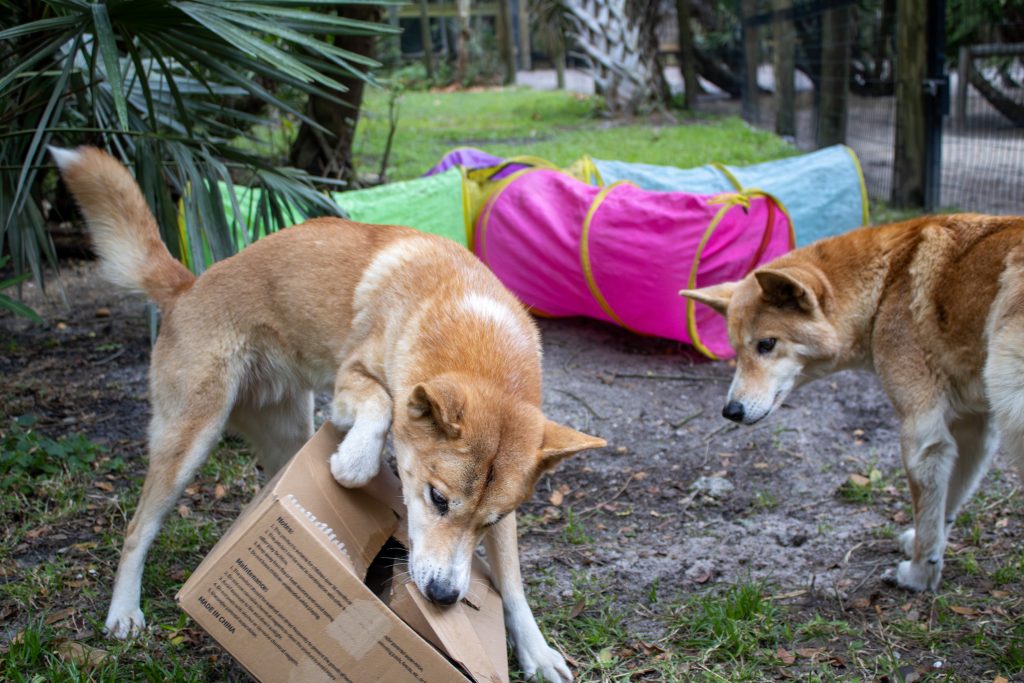
Our dingo sisters are in great shape for their older age.
Our animal care teams pride themselves on providing top-notch care for all the animal residents under their care, from their first breaths at birth to their last breaths in their golden years. While end-of-life care can be difficult to think about, our animal care teams work diligently to ensure that all our older residents are getting the attention and treatment they need as they begin to face more health challenges.
Our two 14-year-old female dingo sisters, Sydney and Victoria, have both aged passed the average life expectancy for their species and are both relatively active for their advanced age. While their continued vigor is a testament to their care team’s diligent training, stimulating enrichment, routine exams and involved husbandry practices, the girls are both beginning to face some health complications.
Our Lands of Change and Veterinary teams are currently managing the early stages of kidney disease in both dingos along with arthritis symptoms. These conditions can cause stiffness and fatigue in both dingos, and their symptoms are monitored daily. While all our animals’ behaviors are observed and documented daily, more documentation usually goes into monitoring our older residents.
“We usually have extra documents to track their wellbeing for any chronic conditions these older animals may have,” said Lands of Change Area Supervisor Kayla. “This allows us to be able to look at trends in their health overtime to be able to manage their care better.”
Teaching our animals to participate in their healthcare from a young age also helps at this stage of life. We work to train behaviors geared toward helping the animals feel comfortable during check-ups and routine blood draws and vaccinations so we can make sure they are staying within their normal health baselines. When check-ups ramp up as they get older, we want our animal residents to continue to feel comfortable.
“Being able to build a strong relationship with the dingoes has allowed us to have them participate in their own health care,” said Kayla.
We voluntarily collect Sydney and Victoria’s urine once every three months and blood once a year. We are also in the process of training both dingoes for voluntary blood draws, and it is going well! Both Sydney and Victoria are eager to participate in training for new voluntary behaviors.
While we still love to see our dingo girls zooming around their habitat, most often in the cooler months, we are anticipating a day where their daily jogs will turn into a slower stroll, and we will be there for them when that day comes.