
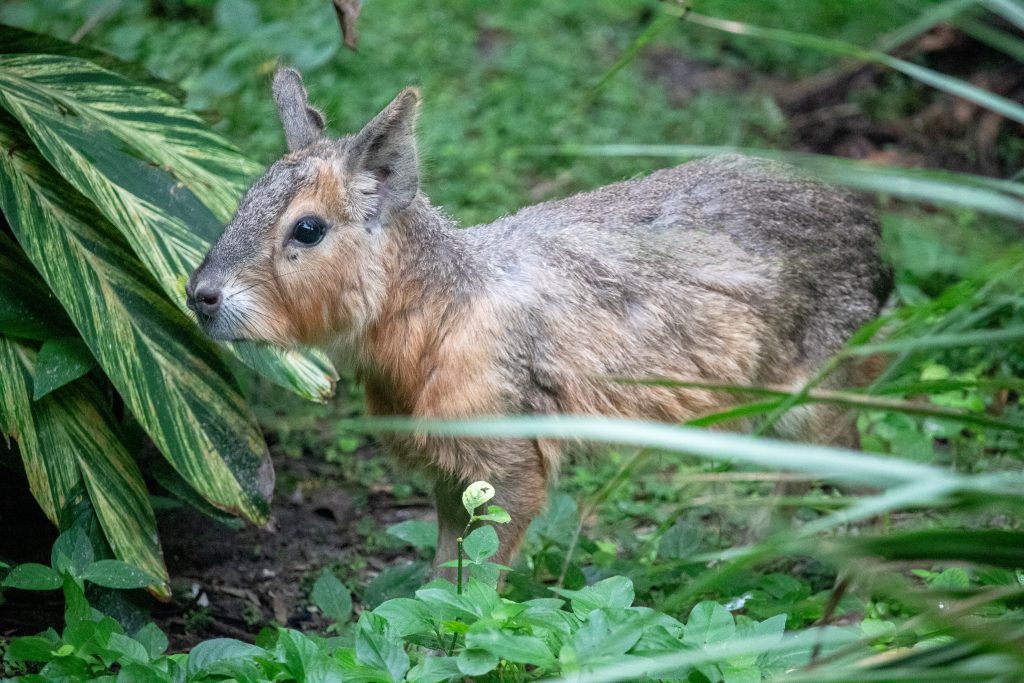
Have you seen our Patagonian mara in our Flooded Forest habitat in Rainforest Revealed?
“Are those baby capybaras? Are they rabbits? Maybe a deer?”
Chances are, if you’re listing off these guesses to your family or friends, you’re likely looking at our group of six Patagonian maras!
Also called Patagonian cavy, these large rodents are known for their long limbs and bouncy gait. They’re native to the arid grassland regions of Argentina and like to chow down on grasses and other vegetation. In their native range, Patagonian mara act as seed dispersers and manage the plant species in their ecosystem. This species is near threatened and has a decreasing population due to a decline in viable habitat and competition with introduced species. We’re proud to give our guests a glimpse into the lives of this lesser-known species, and we hope they walk away with appreciation for these important critters!
Our maras all boast some pretty unique names. Our males are named after Transformers (Megatron, Skullcrusher, and Optimus Prime) and our females are named after Strawberry Shortcake characters (Strawberry Shortcake, Apple Dumpling, and Plum Pudding).
Our animal care team has been working with this group since they were only a few months old. In that time, these siblings have grown to be confident young maras. When they arrived, they were a bit shy around their new keepers, but after putting in many hours of relationship building and routine training sessions, our team gained their trust.
“We are currently training them to target and to get voluntary weights,” said Americas keeper Maggie. “Guests can actually see the scale and chute set up in the habitat!”
Our team built a small chute consisting of three wooden pillars that the mara are now comfortable walking up to. Eventually, they will build up to having the maras stand on a scale to routinely check their weights, allowing them to participate in their own healthcare.
The maras are also big fans of enrichment – especially if it involves food!
“They will interact with slow feeders where they have to get the food out of crevices or go for hanging browse which encourages them to reach up high to get it,” said Maggie. “It’s also fun to trail new substrates for them since they naturally dig and burrow.”
If you’re looking to catch our maras’ most active moments, make sure to stop by in the morning hours or at the end of the day. You might see them grabbing a bite to eat, practicing their zoomies, or taking a dust bath.
Brevard Zoo is an independent, not-for-profit organization that receives no recurring government funding for our operating costs. Your generous support enables us to continue to serve our community and continue our vital animal wellness, education and conservation programs.