
Editor’s note: We are reflecting on our 12 most impactful moments of 2025. Your support made these incredible stories of rescue, recovery and wonder at your Zoo possible. Thank you. We celebrate what your support made possible – and ask you to help create even more magical moments in 2026. Thanks to our generous matching donors, the first $30,000 in donations will be matched dollar for dollar, making these gifts even more joyous. Learn more here.
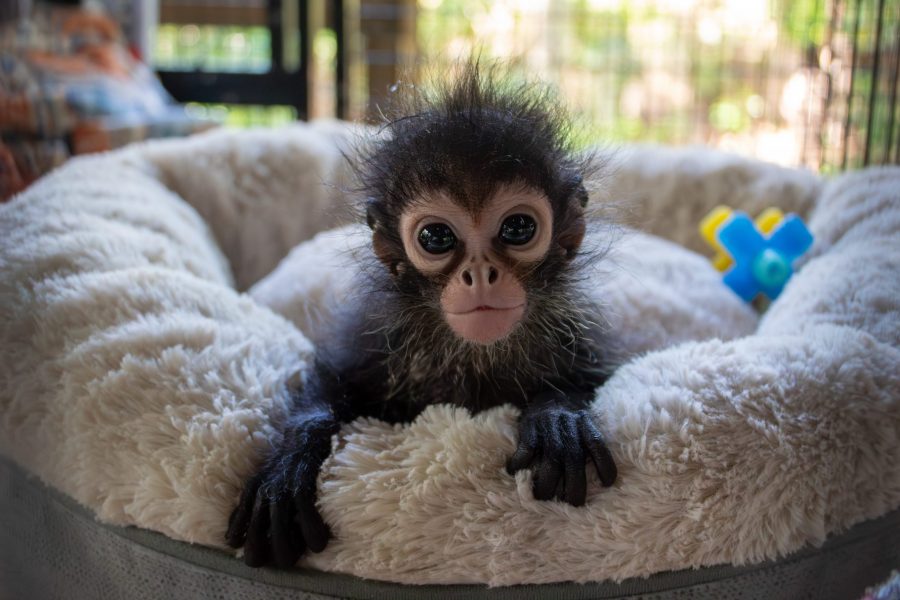
Our Zoo has answered a call that’s unfortunately become increasingly familiar: To care for two black-handed spider monkey babies who were confiscated by U.S. Fish and Wildlife Services (USFWS).
Meet Honey!
Given our success with introducing other young wildlife trafficking victims to our troop, we were asked to try again with these two new monkeys, a male estimated to be about 3 months old named Fernando and a female estimated to be about 5 months old named Honey.
The two little ones are beginning the slow introduction process with the rest of the troop, who have shown signs they would be willing to accept the duo once they get a little older.
We’re confident that with the guidance of our animal care team and partners at Florida Tech, Fernando and Honey will become full members of our troop just like our other spider monkey residents who started off their lives as wildlife trafficking victims: Mateo, J and Finn and Marceline.
Wildlife trafficking has long-lasting impacts. Taken from their mothers and troop, victims like Fernando and Honey miss out on a crucial time to learn how to be spider monkeys.
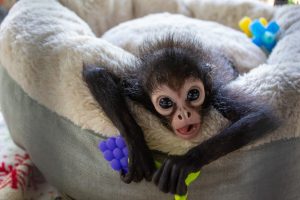
Meet Fernando!
Nonhuman primates, like spider monkeys, are often trafficked for the illegal pet trade. This species needs a special diet, housing, enrichment and socialization to thrive – and they often don’t have any of these needs met in a private home. Couple this with how long primates can live, and these situations often have disastrous results.
Wildlife trafficking is a conservation crisis. Ecosystems also suffer a biodiversity loss, not only because of the loss of the infant, but also often from the loss of the mother and troop, who are often injured or killed by traffickers trying to separate infants from their protective family group.
It’s important to always do your research on the needs of any future pet – and where they come from. Visit NotAPet.net to learn more. You can also contact the USFWS Tips line at https://www.fws.gov/wildlife-crime-tips or 1-844-FWS-TIPS (1-844-397- 8477) if you think someone is trafficking wildlife.
Our Zoo is always open to answering the call to help wildlife trafficking victims like Fernando and Honey – but we wish they could’ve grown up with their family instead.
Want to keep reading?
We would like to thank the following generous donors for supporting our mission-based programs:
Flammio Financial Group · Stifel- Garvin Wealth Management Group · Artemis IT · Pepsi Bottling Company · Amazon · PCL Construction | Nassal | MEC | Heard