
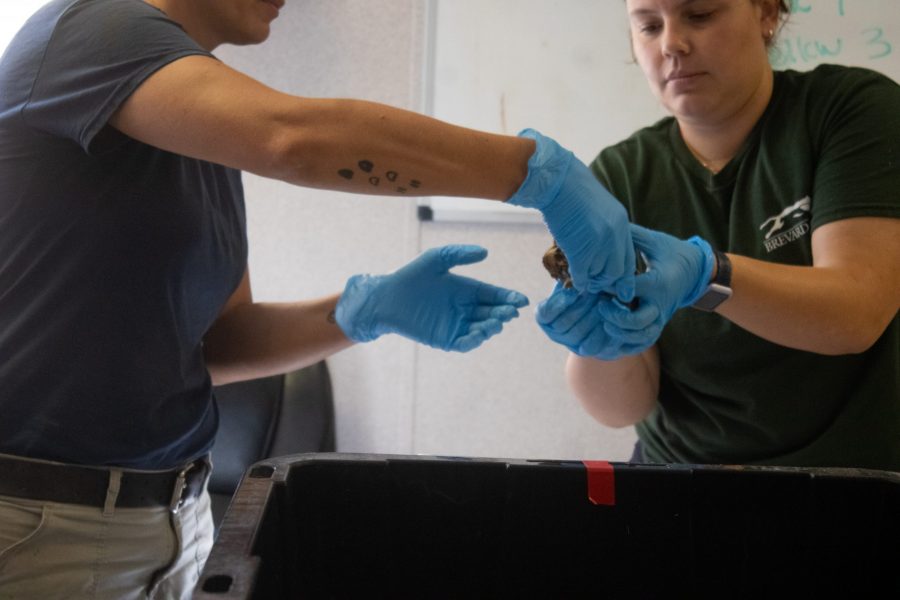
Dozens of box turtles have found a safe home at our Zoo after being confiscated by wildlife law enforcement. Rescued from wildlife trafficking, these turtles are just a fraction of the native turtles seized by wildlife law enforcement this year.
You may spot them in two special habitats in our Wild Florida loop. Some may remain in human care for the rest of their lives, while others may eventually be rehabilitated and returned to their native habitat. It depends on a number of factors, including their health. While we don’t know much about the conditions these turtles were found in, it’s also important to note that trafficking victims are often transported in inhumane conditions which can result in disease, injury and even death for victims.
The impacts of wildlife trafficking are far-reaching, creating a conservation crisis ecosystems struggle to recover from as animals and plants are taken from their native environment.
Our Zoo has stepped in to care for a number of animals affected by wildlife trafficking over the years, from Gulf Coast box turtles to infant black-handed spider monkeys. As a member of the Association of Zoos and Aquariums’ (AZA) Wildlife Confiscations Network, our Zoo is always ready to do our part to support wildlife law enforcement and victims of this illegal trade.
There are a few ways you can protect animals from wildlife trafficking: